This episode includes discussion of rape and sexual violence. We recognize that these topics may be difficult or distressing for some listeners, so please take care while listening and feel free to pause or step away at any time.
What happens when abolition meets its most common objection?
In Episode 2 of Unmaking the Prison Image, host Pooja Rangan brings together curator and scholar Rachel Nelson, documentary scholar Laliv Melamed, and feminist filmmaker Deepa Dhanraj to confront the question that often marks the limit of abolitionist imagination: “But what about the rapists and murderers?”
Drawing from personal experience and feminist media practice, the conversation examines how rape becomes a powerful moral and emotional boundary in debates about prisons across multiple geopolitical contexts. Rachel Nelson reflects on growing up in a family affected by sexual violence and how the “perfect rape” narrative reinforces carceral solutions. Laliv Melamed considers how accusations of sexual violence by Israeli women became a foil for the genocide in Gaza. Deepa Dhanraj discusses the construction of the “good victim” in an increasingly fascist Indian public sphere, and how that shapes punitive populism.
Together, they ask how survivor testimonies can be used to expand carceral harms, and how documentary and feminist narratives can help imagine accountability beyond punitive frames.
Transcript
Pooja Rangan: Hello and welcome to Unmaking the Prison Image, a three-episode series exploring the role documentary can play in imagining a world without prisons. I’m your host, Pooja Rangan, and you’re listening to episode two. But what about the rapists and murderers? Content. Note this episode includes discussion of rape and sexual violence. We recognize that these topics may be difficult or distressing for some listeners, so please take care while listening and feel free to pause or step away at any time. I’m the author of several books on justice driven documentary, including mediations and the documentary Audit and co-author with filmmaker Brett Story of the forthcoming book, Why Look at Prisons? In this short series, I speak with filmmakers, scholars, and system impacted artists and organizers who are doing the hard, necessary work of shifting how we see and how we think about prisons. Together, we talk about the challenges and the possibilities of this work. From teaching abolition in the classroom to addressing sexual violence without reproducing more violence, to interrupting collaborations between the carceral state and entertainment media. I’m joined today by scholar and co-director of Visualizing Abolition, Rachel Nelson, filmmaker Deepa Dhanraj, and documentary scholar Lily Melamed. So thank you all so much for being here. Deepa. Rachel. Lily. I’m really glad that we’re getting to do this together. You know, we had some debate about the title of this conversation, but since I have the mic, I’m going to say that we’re titling it. But what about the rapists and murderers? You know, this is a familiar question to anyone involved in conversations about prison abolition and who has tried to broach it with somebody who isn’t. Because it’s often the first line of defense for people encountering the idea of prison abolition for the first time. And it’s also the limit of what many people, including those who are otherwise sympathetic to the idea that prisons shouldn’t exist.
Pooja Rangan: It’s the limit of what they feel able to imagine. And so I wanted to bring the three of you together, because each of you has had to contend in very different ways, with the limit defining role that rape plays in these debates. And you’ve approached this question as feminist media scholars, as filmmakers, as organizers working in very different carceral contexts. And so, Rachel, your work looks at rape not only as a practice but as an imaginary. Something that helps structure how prisons are justified and understood in. U.s. visual culture. Laleh, you are coming to this conversation as a scholar of intimate media. Especially memorial videos and the role that they have played in shaping grief and political memory within Israel’s settler colonial project. And that includes the ways that sexual violence has been mobilized within those narratives, especially after October 7th. And your work as a filmmaker working alongside women’s movements in India was deeply shaped by the Madura custodial rape case, but also by longer struggles around state impunity and feminist engagements with the law. I think part of what feels interesting, and also maybe a little bit risky about this conversation, is trying to think across these very different contexts about the work that rape does through an abolitionist lens, what it means for you to hold that lens as someone who works with images and with narrative. So maybe to begin, I’d like to ask each of you to say a little bit about where you enter this conversation. And, you know, my hope is that in starting to answer that question, we’ll start to name some of the complexities and specificities that we need to keep in view in order to have this conversation responsibly.
Rachel Nelson: Thank you for that lovely summary and for putting this together. I’m Rachel Nelson, I’m actually the co-director of the Visualizing Abolition Initiative with my colleague Gina Dent. And really, I work as a curator and a visual studies scholar. I have been doing anti-prison work longer than I have been grappling with the role that rape has played, even though rape has always been in the background based on experiences that my family had, um, when I was very young. And so that there was a, a sense in which I began doing anti-prison activism before I truly knew the ways in which rape was being or I only knew in very, uh, kind of embodied ways, the way that rape is enacted within these things. But I’ve been trying to figure out what it is to be someone who is from a family of survivors, of really an anomaly rape, a rape that was by a stranger, a rape by a serial rapist, all the things that were told to fear, right? The monsters that were described supposedly, though, of course, it’s just another person, but trying to figure out how that works within the complex, um, mobilization of carceral logics and prisons in the United States in particular. I mean, I think that it’s what I’m interested in this conversation is actually thinking about how that refracts globally and into different geopolitical contexts. But I’m appreciative of the opportunity to speak.
Laliv Melamed: Okay. So my name is Laliv Melamed. I’m a professor of film studies and University of Frankfurt. And I’ve been working on Israel-Palestine, I think throughout my entire academic career. I wrote a book about Israeli intimate memory culture are. And the way I understood intimacy and its relation to state violence is actually a space of complicity and denialism. And I thought about these spaces that are of the home or of affect and love as places that welcome, but also at the same time, shut away the violence. And I think these questions of intimacy and violence somehow trickled into the project that I’m working on right now, that very much has to do with state impunity and evidence. And one of the questions that I’ve been asking myself throughout is, what does it mean that that the sovereign sits inside your body? And I’ve been asking it in various ways. And then I started working about questions that related to visible evidence and the genocide in Gaza. And I’ve been looking into different cases. Most of them are very clear. Um state crime, um, bombardment of hospitals or bases of, of, of refuge. Then I hit the conundrum around accusation of mass sexual violence during October 7th. Before that, I need to say that rape has been embedded in the structure of Israeli colonial violence. It is known that, uh, Palestinians have been subject of rape in Israeli prisons, and this was part of a legal system of torture. What was interesting to me is that the moment where accusations of rape surfaced around October 7th is really crystallized, a certain logic in which it is not about the harm itself, but about what the call for harm facilitate.
Laliv Melamed: So one thing that became very clear with the complaints about the use of sexual violence during October 7th, when Hamas combatants basically breached the fence and attack Israeli settlements across the border from Gaza. You know, when I when I look at it as a scholar, the question that became very clear to me is not whether or not rape took place, but actually, what does the accusation of rape facilitate and how it Crystallizes a politics of harm that have been very prevalent in the region, and it is something that is very difficult for me to broach because also it made me, you know, question places where, um, my critique and my ideological stance against the ongoing Israeli brutality against Palestinians had to negotiate also different mode of denialism. What was interesting to me is that immediately accusation of rape became a performance of rape. So I started noticing all of these, um, quite brutal campaigns by Israeli women in the public sphere that were sort of a spectacle of rape. Translating rape immediately to propaganda, but also to a logic in which victimhood is a facilitator of a genocide. So that was on the one hand. On the other hand, these were responses with statements like there was no rape. It’s like, you know, it’s fake accusation. And once again, my question is, what is the structure of denialism that is at work here? What are the structures of violence that these rape accusations facilitated and, and cover for? What are the racial dynamics that surface around the rape accusations? What happened when the the people that say we were raped are not colonized, but the colonizers? And I think that’s it for now. Yeah.
Deepa Dhanraj: So so I’d like to say that the Indian context, uh, I mean, when we talk about state impunity and, um, basically the criminal justice system and the way they handle rape in India. So the case, which was a kind of very galvanizing moment for feminists in India to come together around sexual violence, basically, was the rape of very young indigenous woman, and she was 16, and this was a custodial rape by policemen, and it was also a gang rape. The thing is that this this kind of, um, I mean, we call it custodial violence or custodial rape, you see, in many spaces. I mean, you see it in certain zones, for example, like in Kashmir, which have been basically under the occupation of the Indian army for a very a very long time. Uh, you also see it in other places, for example, the northeast of India, where you have the army and the way they deal with women because again, it’s a kind of very militarized zone. So the idea of custodial rape or rape by, um, the army is something that is very hard to move ahead, you know. It’s very hard for it to progress to, for it to actually become a case. And very often for women to even access any form of justice is very difficult.
Deepa Dhanraj: And often the tables are turned and, um, you know, they get away. I mean, they get away scot free. But I feel there’s something that you said that I’m thinking about because in 2002 in Gujarat, uh, which is a western state in India, there was a pogrom, you can call it a pogrom of Hindus, um, Hindu men and Muslim women. And, and the rapes were horrendous. Uh, also murder, I mean, in huge numbers. But the thing is, the, the culture that you’re talking about, you know, the rape culture. Like if if we look at really what was happening, it was I really sometimes felt that, you know, the way custodial violence plays out the way in militarized zones, the kind of violence that plays out in this case in Gujarat was being done by by non-state actors, you know. So there’s a kind of transference, you know, of how certain communities certain you called it racializing. I don’t know, if we can use that word. But yes, definitely certain communities, whenever there is, for example, sectarian violence in India and that you find this this way in which, uh, women, you know, and women’s bodies become the location of this battle. Maybe I’ll stop there. Just it’s just to give you a sense of, like, what we’re dealing with here.
Deepa Dhanraj: But I’ll just complete this to say that after that case which happened, the Mathura case, it was astounding that the the lower court, I mean, the policemen were acquitted. And in the High Court it was overturned. And in the Supreme Court, they were acquitted again. And at that point, there was an open letter that was written by three academics and one lawyer to the Supreme Court, a public letter which really laid the ground for how we look at sexual violence. And ever since then, I think for Indian feminists working on legislation around rape and sexual violence has been very important. It’s a huge site of activism for us. The issue really is that even though there seems to be legislation, it’s very, very hard for anything to progress, you know, in the sense of a conviction or anything like that. You know, the idea of the imaginary, you know, if you go into that. For example, there is always this notion of Muslim men being, um, you know, highly sexualized, perverted, you know, there’s this whole the way that, that, that kind of imaginary that that is built around, around these communities, you know, it’s very much in popular imagination in the country.
Pooja Rangan: I’m very interested to see how Rachel and Lily want to take this up, but I want to just add a couple of things. You talked about how you became involved in the women’s movement, the autonomous women’s movement, which itself emerged as, you know, a complex set of responses not only to the custodial rape case of Madura. That was 1979. Right. But also the abuses of the 1975 emergency. So it kind of, you know, there’s like a longer history to this. But then I want to take us forward, um, to the unexpected boost that the movement got from the public and legal response to the 2012 Nirbhaya case, which introduced a new provisions criminalizing violence against women. So this is the Criminal Law Amendment Act of 2013. I just want to underline for people listening that this is a site of contention among Indian feminists who have also had to reckon with the perverse outcomes of the Indian legal system, which responded to calls for accountability by actually expanding prosecutable crimes, essentially expanding the prison system. It would be really interesting at some point to hear you talk about how you see your own work as a filmmaker, operating in relation to those demands and developments, and where you’ve chosen to locate your attention, and you don’t even have to respond right away because Rachel and Laliv might want to say some things.
Rachel Nelson: Yeah, that’s it’s all very interesting to listen to, for one thing, because of course we know that, um, the United States has really paved the way for what we would call like the hyper criminalization of sexual violence in order to shore up the prison system. So many people in the United States are really used to a narrative that the problem with rape in the United States is that it’s under prosecuted. But actually people who are charged with rape and other forms of sexual violence who go up into the court systems are far more likely to be convicted and are given far heavier sentences than for almost anything else. I mean, it’s actually reworked the law entirely because the idea that the, um, the victim’s voice is kind of the absolute, you can’t question the victim has really shaken up what law is in the United States. And for me, watching this. Now, there’s a higher percentage in the US prisons of people who have been accused of rape and sexual violence. Sexual violence includes all sorts of things from, you know, of course, statutory sex, whether consensual or non-consensual. It includes even, you know, the exchange of pornography online, particularly around children’s images. You know, it’s this wide swath. You can’t actually it’s really hard to find out how many people are actually inside for a physical sexual encounter in all of the reportage out of, say, like last year, out of, say, 700 people who went up on charges of sexual violence, only, you know, 10% of them were for rape, like physical rape.
Rachel Nelson: But you know that. And all that being said is that in the United States, rape has this like, I think as in India has this huge cultural imaginary right that everybody is told to be terrified of rape all the time. That there’s this whole production in media, in jokes. I mean, when I talk to my friends and colleagues who’ve been inside, who’ve been incarcerated, one of the things they say is that, you know, the constant jokes about rapes in prison, that the idea that if you go to prison, you’re going to be raped both impacted the way that they thought about going into prison, but also how people see them now that they’re out. One of my friends told me that he, that people always think that he’s either been raped or raped someone, right? Because he’s been in prison. And this, of course, wasn’t his experience. I mean, he was in solitary confinement almost his entire time he was in prison. So he’s like, he didn’t experience rape either, you know, in any way. He didn’t see it, didn’t, you know, didn’t participate. But there’s this idea that it’s such this huge apparatus, right? That we’re all scared to go out of our houses at night because there’s rape waiting around every corner and we can’t possibly think beyond the prison, because prisons are the only things that keep us from being raped.
Rachel Nelson: And that really, when you begin to break it down, though, what this means. I mean, I have gone into so many rabbit holes of statistics and data trying to parse this out, and it’s like schizophrenia. And I speak from someone who has, you know, real, you know, experience with sexual violence. So we know sexual violence happens. But the way that this tracks on the prisons is incommensurate. So thinking about how this is a disciplinary structure, to say it in the most kind of normal way or the way that we talk about it as academics, a way that it impacts our behaviors and our expectations and rearranges our desires, even if we don’t understand exactly what it’s happening. And one of the things, because I saw that it was an end limit even to anti-prison activists, some anti-prison activists, right? Not all, but that when you talk about rape, people begin to shy away from what you’re supposed to do. And one of the things I wanted to talk about is how much of a problem is this really? Is this a problem of prisons, or is this a problem of the way we’ve organized our culture more generally, society more generally?
Laliv Melamed: I mean, as I mentioned, I was really struggling, trying to, um, theorize why rape is a site of contestation, which, which echoes, uh, the title that you gave to the session. What about the rapists and murderers? You know, a question, Rachel, that that you also say, you know, constantly being referred to you as an abolitionist, why this is the moment where, you know, we kind of like put a barrier to our liberal conscience. We kind of like put a barrier to, to our progressive political views. And there is something with this. You know, once again, I go back to my question. What happened with when when the state sits in your body, in your body. And what is interesting to me also from all the points that we all raised, is that also really become a moment where feminist movement are put under a lot of pressure. Um, and this is something that, that I, I know that we need to revisit our understanding of kind of like a feminist commitment.
Deepa Dhanraj: Yes. So I just want to expand this idea of how do you create like a consensus, like consensus around the fact that rape is exceptional or that it’s like, as you said, the last boundary. And I think in India, if you look at popular culture, you look at films and you look at also statements, you know, for example, when there was this case in 2012 where this girl was, um, actually it was very brutal because she she was not only raped but attacked. And she died a week later. And, and somehow that was a tipping point in India. There were huge protests across the country. It became this massive thing. But if you started listening to what, uh, people were saying around it, and, and there was this minister, for example, and she said, you know, the kind of rhetoric, right? So one of the things was, um, you know, so a rape victim is like a living corpse, the exact word she used, you know, living corpse, you know, in Hindi Zinda. She’s like, she has no life left beyond this. And, and of course, the, the call for, you know, chemical castration, death penalty, nothing less. And at the same time, there was this whole thing of the empathetic victim. I mean, you know, and, and the empathetic victim is somebody who is, say, at least middle class or educated, has this extraordinary future to be very productive and do different things. So it’s very strange. I always keep wondering when incidents happen, that when does the popular culture or consensus or, you know, you have the media, you have everything. When, when do they all get activated and when does that happen? And it always happens when the victim is a good victim.
Deepa Dhanraj: It never happens to women who are routinely, I mean, face horrific things. For example, we call them Dalit, but they are previously untouchable caste women who are considered very sexually available. And that never makes the headlines that never, you know, goes anywhere. So when is there public horror, you know, and how come it’s so selective? At. Who is it for? Well, after that case, when, um, many feminists got into this, I think almost 96 women’s groups who got into the whole conversation about the new legislation and what it could be even to say we’re not talking we don’t want death penalty. Let’s not go there. You know, we’re not talking about castration. We’re not talking about about living corpses. And it was so hard, you know, really going against the tide. Okay. And when the parents, for example, the parents of the victims, for example, would would be on the street and they would be the icons, you know, of like, what has happened to family, what has happened to children? And they, they would be the loudest, you know, in all this that I want to see them hang, you know, this kind of language, right? Uh, so that’s always been a huge issue, you know, for Indian feminists, how do you even, um, create new language and how to battle this kind of language, right? And there was one young woman actually who came out and said, you know, I’m not a living corpse, you know. Please, can we stop this? Right. So I just feel it’s really something that is constructed and constructed with every incident.
Pooja Rangan: I just want to pick up on like a few things and just maybe, like, bring them to the surface again, where you you talked, Rachel, about how, you know, perhaps we need to think about rape not as being a problem of prisons, but about how societies organize. And then something else that I want to put forward is that, you know, a kind of dilemma of rape with regard to the feminist movement and the place that it puts pressure on it, which is something that Lieb said has to do with the tremendous moral as well as legal affect that it that it commands. And so it is a matter of feeling. And, and it really forces the movement to contend with the place of feeling in, in politics. And then finally, the thing that I want to pick up is something that is at the very heart of your research, which has to do with, with good victims. Right. And I think that we’ve been struggling with this ever since the founding of Israel as, as an ethno nationalist state, uh, which is that it, it, the very structure of violence that you’re naming here is one in which testimony feelingful testimony, when it is taken up by someone who in the larger structure occupies the position of a perpetrator, is, is, is really incredibly demographically powerful in kind of stirring up what we might think of as a kind of punitive populism, right? Like this kind of desire for a large scale response.
Pooja Rangan: And this is someone who we both know Alisa Lebow has written about in response to your work, is that it plays on the same viewer habits, which is that sympathy and sympathy and identification are kind of lurking as a potential response, waiting to be baited in this way. For a while now, I’ve been working on a book with a filmmaker and a scholar, Brett Story, who actually participated in the last podcast, and it’s a book on the documentary field and the role of this field in both shoring up as well as dismantling carceral common senses, by which I mean very commonly, very deeply held ideas about why prisons should exist, ideas that, like, we should lock people up when they do something bad. Ideas that responsibility is individual or that accountability is punishment, and so on. We’re interested in what shows up on screen, and then the funding and platforming practices that organize what shows up on screen, these images and narratives. One of the phenomena we’ve been thinking about the US context, but I think that there is a lot about this that is, uh, has resonances in other locations as well, is the emergence of true crime as one of the few genres that is currently being greenlit and funded.
Pooja Rangan: And there’s a lot to say about this genre, but something that brings us close to our conversation today is the narrative salve that this genre offers to victims. And especially in this kind of post MeToo moment, uh, media scape is just saturated with narratives that frame carceral punishment as a means of vindicating the suffering of survivors of sexual trauma. And you know, these films, television shows, podcasts, I mean, they are everywhere. They do this often by suturing pain, which is often experienced for people watching these shows as empathy to the outcomes of criminal legal trials. So lock them up in such a context, even those documentary forms that imagine themselves to be self-consciously feminist, um, can find themselves in the position of becoming vehicles of, of, shall we say, carceral capture just because they offer, uh, the promise of some kind of emotional release as a substitute for actual justice. And, and, you know, often these are projects that give extensive space to survivor testimony and, and that, you know, I think that I’ve learned from work that that is a very powerful moral device because they, the tram up and the person who is watching are distinctly kind of juridical sensibility where you feel, oh, I’m being called on to arbitrate a truth claim and to remedy a system that has never listened to survivors, and to partake in forms actually of judgment that justify inflicting pain and punishment.
Pooja Rangan: And I guess I’ll just say at the end that there are some connections to be formed between the aims of these kinds of justice seeking, uh, media forms and this punitive populism that is activated by the news media when it functions as a space of moral theater or public catharsis. So just to come back to India, Deepa, I was thinking about how last year in India, there’s a trial court in Gujarat that sentenced a man to death for the rape and murder of a ten year old girl. And this was like, publicly applauded. And what is at the same time harder to swallow, is that this collective punishment was in some ways a result of feminist efforts to reform rape law. And in the US, you know, a result of anti-violence and victims rights movements of the 1970s. So, yeah, I mean, I guess, you know, you’re welcome to kind of take this up in any direction that you all want. But but I mean, my end game is to think with you all about what it means to chart a different course in media practice and what it means to engage directly, people directly impacted people and communities in, in a different kind of conversation about ending sexual violence.
Deepa Dhanraj: Netflix in India, for example, if you look at what they fund, what they have funded over the course of this period that they’ve been here, the maximum stuff is true crime. Okay. True crime and horrific cases with, uh, you know, really, uh, hyper real reenactments, dramatic reconstructions. And it’s almost like if you talk to friends who are trying to, you know, get stuff funded, they keep. Friends of mine will say, you know, but I don’t have a true crime story. You know, it’s reached that level. Right. Of what’s happening, even if it is suggested, you know, that we could start a conversation with people who were imprisoned actually in prison. It’s it’s the backlash is something huge. You know, for me, I think in India, the thing is, there is this notion of I mean, the rupture is, you know, defilement, you know, because they come back very aggressively, you know, against any other form of, uh, you know, trying to talk about things. I mean, my interest is really to look at very criminal impunity of state systems. You know, um, I mean, if you look, whether it’s the police, whether it’s like, um, the anti-terror legislation, whether it’s that kind of incarceration, whether people are kept in prison as undertrials for years together, the process is just that process is the punishment rather. And I think for me, that area, because I feel what happens there, you know, leaks out into the real world, you know, in different ways in terms of kind of violence it promotes or projects or any of that. And that is a case I just want to tell you about it. It’s um, this young woman who was, he was a vet and she was raped and murdered. Now, the next day you have the, the police who round up four young men.
Deepa Dhanraj: Can you imagine in 24 hours, what kind of investigation is that? And they just. He just shot them in cold blood. That was it. You know, just shot them. We call it encounter killings, extrajudicial killings, whatever it is. And then the public response, which was so unbelievable, is that you had women, mainly women, going up to this guy and, you know, garlanding him, thanking him for being their protector. And all this is on TV. All this is is screened and everywhere. And it was actually the feminist groups in that city who challenged this and said in any, any context, you can’t be killing people. And you know that there has to be a police inquiry. So this idea of summary justice, you know, we are at the level of summary justice. Okay. And we want to move to fair justice. And then maybe utopian abolition. I mean, it’s such a different stage, right? In India, you know. So I have to say that because of the efforts of these of these women’s groups, particularly with this one case, you know, that the actually there was an investigation and the the police and even that officer, um, I mean, there was at least some accountability, but it took it took the feminists to counter this whole thing of the other women. Garlanding this guy who, you know, that’s how you do it. And the 2012 case, the woman at the young woman who died, her mother said, you know, I wish, uh, you know, my daughter’s perpetrators had been shot. I mean, this guy is a hero. So you have all this national conversation. Okay. Which is which is horrific. I mean, you know, it’s just, um, yeah.
Rachel Nelson: I mean, this is also interesting. And so, you know, I, I, this will, this is probably the first time I’ve ever talked about my experiences with other people, like on a public venue or whatever. I’ve pretty much had my whole career trying to not censor myself into it. So I’m just going to just want to respond because this is something that’s so familiar to me. What you just sketched out the contours of that because what happened to my family, and I’ll just do it really fast is when I was 11, my mother, who was single, my father had left. She had three kids. It was me and my two brothers, a person who had raped like a dozen other women in our neighborhood came into our house, um, raped my mom by gunpoint, you know, kind of held us into the house, etc., etc., etc.. Um, left have stayed for some hours, left the house. About a year or two later, he was known as the Green Hills Rapist, so everybody knew he was around. I knew he was around before he came into our house. Um, maybe two years later, he was pulled over. He had left fingerprints at our house and had left some other DNA or other evidence, other places, and was arrested and convicted and given multiple life sentences. My mother is white. We had no money, but she was a graduate student, you know? So, I mean, we fit this idea of the perfect victim.
Rachel Nelson: And, um, what my brother calls it, it was the perfect rape, right? Like somebody was raped by a stranger. The person got arrested, they went to jail, they got, you know, ten life sentences or something. So it was like the perfect thing. And, you know, when I was 11, when I was 13, when I was 15, when I was 17, when I was 20, I was like, oh, okay. That’s how the system is supposed to work. And yet, as I always said, it certainly didn’t stop rape. But one of the things I can say is that why do we expect survivors to have anything other than the same desires and the same ideas of solution than anyone else? Like that’s all we were presented. We weren’t told that there was a it might be a better option when that happened. There were in the United States, under 600 000 people in prison. It was in the 80s. So in the United States at that time, we were at the very beginning of mass incarceration. So there were 600,000 people in prison. Now that there’s 200, you know, 2 million people in prison. I started to look around me and think, what has this rape, the perfect rape done, allowed for? Right? Oh, and the rapist was white.
Rachel Nelson: So it’s like the it’s the it was the perfect scenario. As if race doesn’t drive our prisons. It took me years to realize that, um, the only solution we’re ever given is carceral. And it’s no solution at all. Because, of course, the prison is the site of violence, of interpersonal violence and rape. It creates the structures that normalize those things. I talk a lot about carceral feminism in my work, too. That’s what we call it in the United States, the kind of feminist actions that serve to shore up the state. But I’ve actually started to get really concerned by how much we talk about carceral feminism within this production of rape in the prisons, because I’m like, well, then we should be calling the federal government in the United States Castle feminists. We should be calling the government of India carceral feminists, and we want it. And I’m like, you know, the problem isn’t carceral feminists. The problem is the structures that are carceral, right? So like, how do we quit blaming, um, the people that are not the people in power for what power in the state is? I think, uh, when you say the state, how the state enters our bodies. Like all of our bodies, it’s possible for them to enter. You know, I mean, I having lived, uh, in many ways as an exercise of the state, right? That all these I always feel like, you know, that this some of this has happened in our name, right? And, um, so I mean, I’m not giving people a break for it.
Rachel Nelson: I just, I’ve been reading a lot of literature in which we’re talking about carceral feminist, and we lose the critique of the state and the lose the critique of power in it. So I just wanted to say that. And then I also wanted to say, when you were talking about the living corpse, right? So, you know, when I was 11 and this happened, I became a particular person. I would always call myself the pre, right? The person who lived with rape before, before sex, before intimacy in other ways. That rape was, you know, kind of my context. And I saw the fact that I did not have, uh, necessarily have peers, right? I was always the kind of odd one out. And like people’s parents would warn each other before I came over to spend the night at their house and stuff, because maybe I would tell their kids. It took me years to realize this, is that as long as we were victims of rape, as long as that, that also the person who did this had to remain a rapist right now, that neither subject position can ever be left.
Rachel Nelson: And the vast majority of rapes, the people who actually perpetuate rape, believe it or not, are like under the age of 25. They’re pretty young, statistically. Now, what this means, like I said, the statistics, if you look at data on rapes, it’s like falling into a schizophrenia. If you can’t tell what anyone’s talking about, you don’t know what this means. But let’s forget about that. If we just say the majority of people who commit acts of sexual violence probably do it between the age of 16 and 25, and then for the rest of their lives, they are rapists. There is no place to go from that. They are also a living corpse, right? Except they’re not. They’re living. They’re living violence. That to me is unsustainable. And so, like, how do we begin to cut through what that that deeply embedded ideas of what we want? What we want is not to be raped. What we want is people who rape to disappear. What we want is for them to be removed, to keep us safe, to keep everyone we know safe, and our ideas of solution, you know, disconnect from this thing where everyone is stuck in place. Because of course, if we don’t want people to be rapists, then we should allow them not to be.
Laliv Melamed: I have a lot of thoughts that I’m trying to collect them, but one of the things that, um, that I keep kind of like thinking about has to do with something, you know, all of you mentioned, which is about the way this kind of like. The way rate appears in popular culture as a fantasy. And this is a moment where the structure that for me, I mean, all of a sudden things become very clear. Uh, and also I realized that for me, it was really, really important to articulate very closely what’s happening with this kind of like what I call the popular spectacle of rape. First of all, there were many stories about October 7th, and the most horrifying of them turn out to be not true. And then you already ask yourself, what is this kind of like cultural evidence that manufacture lies like plant life? I do not deny harm, but I ask myself what’s happening with evidence? But the other thing that happened were these what I call the spectacle of rape, and also then how the spectacle of rape that come from the layer of popular culture, how it is then being taken up by the legal system in order to produce further abuse, both for those that it deemed potential rapists, which is an imaginary and but also the victims, mostly the perfect victims. The moment where I started noticing it is when I saw this kind of like photo op of an Instagram influencer named Natalie Dadon, who went to the Holocaust Memorial in Berlin with what was literally termed in the Israeli press a rape dress. So it was a haute couture white dress with, um, red stains in, um, in her genital and breast. And I was like, I mean, what are we producing here? Is this an evidence for what? Nevertheless, it is something favored by by Israeli and international media.
Laliv Melamed: So this kind of like call for victimhood, which is, on the one hand, extremely moralistic, on the other hand, at this point extremely genocidal. Um, another thing that I noticed, because the Israeli government was so eager to produce these records of rape, mostly to kind of like protect itself and to justify its genocidal campaign, medical staff were asked to provide information to the government about potential victims without their consent. And for me, I know it sounds extremely cynical, but I say that in the Israeli public sphere, people come to know the system of Israeli colonial violence only when it manifests itself on Jewish Israelis. So the moment when the victims are being victimized again. This is when you understand you, as in the Jewish Israeli public sphere, you understand that rape is a state device that becomes a mechanism. I was very influenced by, uh, by, um, I was very influenced at this moment by, by an essay by Neda Eliya, uh, that was published that was called Weaponizing Rape, where she really looks into the way in which rape was used as a device of colonial violence. So not just as a, you know, not just, you know, rape was part of the violence that the colonizer implement on the colonized, but actually a system that justify violence. One thing that I’m kind of like I’m grappling with in the formulation that that all of you suggested is, is the moment where the legal system is taking up by the public sphere and become this kind of like popular legal imagination or sort of a legal moralism.
Pooja Rangan: I’m thinking a lot about what you have written, Rachel, in, in this remarkable piece that is forthcoming from you about how the prison is a, is a is a time machine and rape functions to calibrate our internal clocks to the time of the prison and all of the ways that the prison operates as a site of, you know, state violence, but also of governmentality. I was thinking, too, about what you suggested about the expansion of the meaning of rape and the role that the state plays in this, because in India, rape trials have been used to maintain the Heteropatriarchal family by, in fact, blurring the boundaries of rape and love of elopement and abduction as a way of criminalizing socially unacceptable love. And so even the ostensible avenue for pursuing legal recourse is of a disciplinary tool that is entirely bound up in policing women’s bodies and their their desire, their access to public space. Um.
Deepa Dhanraj: Especially young people. This is huge. You’re talking about adolescence. Um, many of the cases where, uh, say, yeah, below 18 or below 17 if they run away or if it, or if it’s a interfaith or a inter-caste relationship, the parents of both sides actually use this legislation to put the boys in prison, basically. So it’s it’s considered like statutory rape. And in fact, it’s so such a big problem now. It’s like almost like a epidemic, you know, as I was saying, of course it’s the family. But apart from that, I think we also have to talk about that. You know, we are entering a completely very fascistic Hindu supremacist government and not just government, but I mean, it’s incredible how how it’s functioning, you know, in the popular sphere in society. And it is not just that it is Hindu supremacist. It is also, uh, what do you call it? Very fastest, you know, so there are many layers of this kind of thinking that vigilantes are using, you know, and the vigilantes are getting absolute start to do what they do. And so much of it is around using, using, using rape or statutory rape or sexual assault or whatever.
Deepa Dhanraj: That’s the that’s the sort of legal fig leaf that they use, you know, in these situations. And it’s horrifying that at least in six state governments, they have actually passed legislation banning particularly interfaith relationships. And it will go to Inter-caste also because, again, because there is this idea that, you know, Hindu women are going to be abducted by Muslim men. I mean, you call it imaginary. I don’t know, it’s it’s like a very dangerous, popular hallucination that we’re all living with. It’s crazy. It’s now not just in families or in society, but you have a notion of what the Hindu supremacist state is going to look like. And that’s becoming very clear. You know, that it is authoritarian. It is a very castus, it is very Islamophobic, and it is very anti-women and definitely very anti women’s choices, whether it’s desire or relationships or anything like that. If I think of, you know, what feminists have to work with now, you know, in India, how do you manage this? And it’s not so simple that it’s just popular culture that we have, we have, um, I mean, how would you describe the RSS?
Pooja Rangan: I would say it’s like a volunteer paramilitary organization.
Deepa Dhanraj: Yeah. But I mean, what their ideology is based on, which is basically has nothing to do with Hinduism as a religion. It’s got to do with the Hindu. I mean, it’s a supremacist, any kind of supremacist definition anywhere in the world. That’s how they operate. It’s very macho, it’s very masculinist. It’s this kind of thinking. And the fact that Muslims, for example, will have to accept living as second class citizens. They, you know, this this notion also of where they they are being slaughtered. Um, and again, uh, terribly caste ist, you know, in the sense of, uh, it’s only the upper castes who will control things, their morals, their values. So you can imagine this is a state project. It’s not just any more popular culture or anything. It’s everywhere. I mean, it’s leaked into law. It’s it’s in universities, for example, they’re gutting universities. The the way they deal with dissent or any kind of public protest about anything. So you see, when you map all that onto how they think of women and how they think of masculinity or rape or, or sexual violence, it’s a horror show. I’m sorry. I’m sounding so, um, you know, but but it’s it’s, I mean, and I don’t know, you know, how many fronts are we going to fight on? Do you think it won’t get worse? And it does. Mhm. Always does. So that’s another tough thing because you have to come up with not just strategy, but you have to come up with with an alternate worldview. Every time I’m very despondent actually about the state of affairs in India now. I really am. All our, um, so-called public media is private media. They’re going to be changing the, um, the legislation on, uh, what it’s going to be allowed on the internet or not. You have a lot of surveillance on those kinds of things. Cases are filed on people may tweet something on a tweet, you know, and you’re picked up and charged with sort of anti-terror legislation. I mean, it’s become it’s horrific. Yeah.
Pooja Rangan: I’m operating on like quite a delay because I feel that I need a lot of processing time for each thing that is said. And so now I feel capable of responding to something had said earlier about evidence and denial of evidence. One of the ways that we challenge state impunity is by producing irrefutable forensic evidence of it and releasing it into the public. And we’ve lost count of how many times this strategy has failed. And yet we try over and over again. And of course, the most recent example is, you know, it’s coming to the fore all over again. With the decision of Israel’s Supreme Court to acquit five of the soldiers who were caught caught on CCTV, perhaps even staging for CCTV. And this was nine people who were involved in this in this brutal gang rape of Palestinian detainees in 2024. And I’ve been thinking about what you said about the kind of production of spectacle and, and, and actually thinking that perhaps the issue is, in fact, that evidence does not function narrowly as evidence. Right. It actually travels as spectacle, and it has traveled in the manner of a snuff film. And it has it has been taken up by a similar kind of a mob. Right. Like a kind of, of an internet mob and turned into a very different thing than what was being framed as, as by people who wanted accountability for just the mass incarceration and torture of Palestinians.
Laliv Melamed: I mean, I maybe I can bring the two together because I’ve been thinking about the state of corruption and the state form that we’re dealing with, uh, which I think is very, uh, it permeates in the sense that it’s not staying contained within the legal form or, or the military form. Right. So I was thinking about what you’re saying. I mean, I think Popularism became a medium for the fascist state to reproduce itself. How evidence is being co-opted, actually, for the denial of evidence. So we have all these, uh, rapes, spectacles, uh, that, that were formed as a campaign to basically lobby for an investigation of the weaponization of sexual violence during October 7th that but nevertheless didn’t cover up or deny the very, very concrete evidence of a gang rape instead of a male Palestinian prisoner in 2024. Um, and it all kind of like it all meshes together in a way that, that that doesn’t produce actually clarity or evidence, but just more denialism. We have rape that is being co-opted into. Rachel what, what you were calling, um, the imaginary of rape that then feeds into asymmetrical system of mass incarceration and racism. And I think that in the system of co-option, rape has become a very effective signifier.
Rachel Nelson: Yeah. And I mean, I want to also, I mean, respond to Deepa because I would just say that I heard you loud and clear because, of course, in the United States, we’re so quickly moving into a openly white Christian supremacist state. Whatever Christian means in that, I think that the India, um, you know, uh, format of how Hinduism like plays within it is a really interesting way to refract on the way Christianity is playing in the United States in this kind of formless, like it has nothing to do with religion, but it’s this kind of another way to put it together. I think that this insistence on keeping people in their places, through class, through race, through gender, through sexuality is so crucial. My main kind of way of thinking about prisons and rape is that they both together work to kind of stop time from ever progressing on ideas of race and class, right? Like they actually struck their the structure, they build the prison and they keep these things in place. I mean, when you walk into a United States prison and people are housed according to how they are ethnically and racially identify, that’s how you’re going to where you’re going to be put on the tier. All of that stuff where you’re going to be let out into the yard. You’re obviously also housed based on your gender, right? There’s women’s facilities and there’s men’s facilities.
Rachel Nelson: Folks that are trans end up kind of it’s almost random. It seems like sometimes where they’re placed, but in each place, when they are put in, they’re put into a special wing. So they’re not mainstreamed. Right? They have a kind of special yard that they’re assigned to. So like the prison does everything to reaffirm all of these social constructions, right? And to keep them in play. And that’s why I think that rape is such an essential part of it, because rape continues to allow this production of masculinity. It allows productions of, you know, of sexuality laws, productions of all of these things and keeps them held as if we never learn anything, right? As if there’s no wiggle room of what it is to be in these identity positions. I share your like, dismay and, you know, disillusionment about what we take on. But to me, and I also, I mean, I love the way that you said it’s like a hallucination, right? I think that when I say schizophrenia, the word I’m looking for is hallucination, that this we’re living in this hallucination and that all I can think of is our role is to show people that there are other ways of possibly seeing and knowing and believing. Like at this point in the United States, again, where protests are getting incredibly dangerous, you know, but where, you know, we saw definitely around Palestine people being fired from their jobs and stuff by things they post on social media, all of that.
Rachel Nelson: I mean, the culture of self-censorship is so strong right now in the United States. And the fear, right, that you’re going to lose everything. The thing is, it’s about, uh, wanting something other than this and figuring out how to see beyond what we think we know, and refusing these containers over and over and over again. I teach, you know, and, um, when I’m in the classroom, you could see that that’s what the students want. They want to know that this, that there is a way out or that the prison isn’t as solid as it looks. We’re always talking about, you know, every building has to be maintained or it starts to crumble. So how do we withdraw the maintenance of these systems in every single step of what we’re doing, no matter what we’re doing? How do we not keep recreating it? Which is often why I don’t try to talk about my story and try to put it at the center, because I know it’s so easy to use, has been used to shore up the system. How do we, like, figure out how not to write? And maybe that’s not enough to want, but it feels like right now that’s what we have to want and to be able to share those visions with others, at least at some level.
Laliv Melamed: I wanted to think about the kind of like gender dynamic though, um, kind of like an immediate follow up to also what I said earlier. So the idea that that, you know, Jewish Israeli women were raped and licensed the mass killing of Palestinian men. And, and I’m saying licensed the mass killing of Palestinian men because, you know, even in, in realms of Palestine solidarity movement, when when we want to represent the the destruction implemented on Gaza, we always start with saying how many children and women died, but men died too. Right. But but the category of men is dismissed because potentially maybe some of these men are combatants, therefore are licensed to kill. I mean, okay, maybe I’m jumping on this train that I don’t know where it’s going to lead us. But one of the things that I was thinking about the general, like the wider framework of nationalistic reproductive politics. So it doesn’t stop with rape and the hallucination that people was talking about. I couldn’t not notice the what what happens with other bodies and body parts in the genocide in Gaza. So first of all, Palestinian bodies are rendered abstract because they’re dismembered, literally. But there was also all these items about parents of dead male Israeli soldiers who got the legal permission to extract semen from their bodies. So I was like, what’s happening here? One body is being completely dismembered and the other body become this, I don’t know, like a hyper reproductive zombie. I do think that it has to do with this kind of like, fascist imagination of the body, of this nationalistic imaginary.
Deepa Dhanraj: Exactly the same in India. Exactly like certain bodies. It’s not that they don’t count anything, but there is no awareness even that they were bodies, you know, I mean, and we see it in so many places. It’s just shocking actually, how they are treated, not just dismemberment, but also in these very militarized zones you come across, there are mass graves. Nobody knows who’s in there. And this has been going on for such a long time. And somehow those bodies are not important. But then other bodies, for example, if any of the army or any of them are, then they absolutely spectacular public funerals. You know, it’s there for everybody to see. It’s it’s making my hair stand on end. The kind of weird similarities, I wouldn’t say like certain states, you know, and I think definitely, uh, I think this government really looks to the Zionist state for everything. I mean, we bought all the surveillance systems from there. I mean, Mossad is training our guys. Even the idea of this, uh, kind of what that genocide meant here and to look at Palestinians somehow this whole Islamophobic notion. I mean, we couldn’t have protest in India, you know, and it’s hard to tell the police that, you know what? Because for them, there’s a very clear order from the Home ministry, right? I don’t know, maybe we also have to start looking at these international connections somehow. What are we exchanging and what’s moving into other locations? Right.
Rachel Nelson: One of those moments that I keep returning to was three months after October 7th, right? So in February, we had some folks, we had been planning an exhibition with a group from Palestine who were based in Ramallah, and they came to see us then. So three months after October, and we were able to get them into the country. I don’t think we could do it now, but I don’t even know. It was some sort of miracle that one of the things that they said, you know, and they’d all been to prison, I mean, they were very young. They were in their early 20s. You know, everybody in in Palestine has been to prison. One of the things they said was that when they were in the United States, they understood for the first time that the United States and Israel were the same place that they said they could feel it in their bodies, that they had always thought that the governments were connected, but hadn’t realized it was. And I just I returned to that over and over and over again because, I mean, of course, the United States and Israeli folks have been training each other the whole time. But this embeddedness now we see with what’s happening in Iran like that is the United States. And yet the line is so blurred now there is no line and it’s gone. But wondering what that means when, as our governments fold into each other more and more and more overtly, what this is going to mean in the long run.
Pooja Rangan: I think what I’m valuing about this very painful conversation is that, to speak from this location of what we’ve used to organize this conversation of rape, it actually allows you to see patterns of state violence and of of fascism. It brings them into a certain alignment and perspective that is, if nothing else, something that allows us to see and to figure out what to do. I was trying to think about the form in which I want to ask you this question, and I think I’ll do it in this way. How do you see the relationship between where you’ve chosen to focus your energies as a filmmaker and what we’ve been talking about here? And, and I’m asking this because, you know, you’ve always been interested in the law and your films often tackle sexual violence. I’m thinking about something like a war and invoking justice, where and also your work with Uganda, where you’re very strategies of filmmaking and also the address of your films is often to communities of women organizing among themselves and trans people to in other films. And so I’m just wondering if you could talk us through this, because I do think we, we we have these visions. You’ve given us these visions of how else things not only could be organized, but are being organized.
Deepa Dhanraj: You know, when Rachel was saying, we have to find other ways to interrogate where we are and how we can present alternate propositions. And I think in all my work, what’s always attracted me is when, uh, you know, when women really go against the grain of what is considered orthodoxy and when they can name it from their lived experience and when they can theorize it from their location. Mhm. And this is always for viewers shocking, you know, because already the notion where women, sepsis in Muslim women, for example, or in certain locations, or who they think, you know, in the popular imagination, like who are they? And, um, and then you, you do something which totally torpedoes that, that, you know, that representation. And I think for me that that’s always been the exciting part of why go into a film or why go into a subject really? And I think now more and more, if you look at the kind of information and media ecosystem that we live in now, you know, with deepfakes and, you know, I mean, there’s so much stuff out there, but you just don’t know what to believe anymore, you know? And I just think that we have to find new ways really to somehow penetrate those and go back. You know, you have to sort of bust the hallucination, I don’t know. We have to find ways that how can we do that? And somehow I had great faith and trust in people, sort of native intelligence, you know, as to how they see things. If there is time, for example, to, uh, to actually make a space where that can be heard or people can have those kind of conversations because we have to create new tools, we have to create new language, we have to create new forms.
Deepa Dhanraj: Everything that we did earlier somehow is already treated. You know, it’s such a binary, you know, like you are on this side or on that side, and we have to do something to destabilize these positions, you know, complicate things and destabilize things. And somewhere I feel like if we really start going super local, you know, very hyper local in terms of what people are experiencing and, and living, especially if you’re talking about documentary or film or, uh, even writing. For example, we did a book on Muslim women survivors of sectarian violence, and we looked at four locations and over a long period of time, like 86, 92, and 2002, that whole experience really, it was very hard because you’re talking to people who’ve already been through trauma, you know, all kinds of trauma, that you have to have a kind of ethical protocol when you start something like that, like people make, make them revisit, uh, things like this. And in many cases, they’re sort of living very close to the perpetrators who had actually on a daily level, you know, where you have to confront them in some way. But I really feel like that book or that whole process and that work in a sense, I feel did challenge quite a lot of ideas about where women were, who had survivors who had come through and were, you know, negotiating with the state, negotiating with family, creating with livelihoods, with the market, with all kinds of things. And what were the complexities in that? And yeah, so I think that kind of work.
Laliv Melamed: I wanted to say something about making a documentary deeper. Um. You know, I, I’m, I always say that I’m a documentary scholar who never worked on documentaries per se. I mean, I work as a programmer for film festivals, but, uh, actually I write about various emerging media and, and, um, I found myself more and more in the last two years thinking about documentary because I think what has collapsed for good reasons and also bad results is sort of a liberal consensus about the state. And I say collapse for good reasons. Because, you know, to begin with, it was really those problems. It facilitated so many of the wrongs that we’re witnessing today by mentioning mentioning it here, because I think, you know, I kept on asking why rape is such a signifier. And I think because rape sits at the kind of like, you know, deeply embedded liberal moralism about the way we understand and approach our body saying this, I don’t want to license any harm on the body, but but I do want us to question the liberal moralism. Uh, so for all of these reasons, I think liberal moralism have collapsed with bad results. Is that, you know, in the vacuum that such collapse have left, uh, what infiltrated and is flourishing is, is fascism and the complete abuse of system that were, Her up to my view criminal to begin with. So now we miss the idea of a functioning legal system, but it was never functioning. Now we miss the idea of a functioning democracy. But democracy always produced a horrifying excess of people, kind of like kicked outside of that system as much as it kind of like produced this ideal citizen that has all the rights. It also produced the non-citizens that has zero rights in this diagnosis. I think the only tool that maybe I think is favorable from this system of liberal democracy is documentary, a sphere that is always already compromised, nevertheless facilitate a mode of address and listening. I’m inspired by previous work. I think allow a system of knowledge production that contested the law nevertheless stayed within the realm of liberal democracy.
Deepa Dhanraj: I agree. Yeah, but I would go further. The thing with documentary really now, and that’s a challenge for all of us, is that the old tropes, you know, of documentary in the sense of whether you’re looking at justice framework or you’re looking at a, you know, feminist framework or you’re looking at gender relations or all of that that’s already been appropriated and transformed in very bizarre ways. Okay. Already it’s, it’s just morphed into something unbelievable. So I think this thing of very cleverly revealing how we take it apart would be very interesting. In all my work, like, you know, I’m just fascinated by listening. I’m fascinated by voice. That’s been my thing for ever, you know? So the thing is really now to, as I said, I use the word complicate deliberately. You know, that’s complicated by creating like so many positions like polarities and views. Try and make something that’s very hard to co-opt or appropriate. I would say that that’s, that’s, that would be something I don’t know if one can do it, but that’s what I’d like to do. You know, I’d like to do something that cannot be so easily just sucked into. Any kind of framework, you know, that exists now because they’re all so compromised.
Rachel Nelson: I’m not a documentary scholar, so I want to just put my $0.02 in, in this. And, you know, one of the things about visualizing abolition as an initiative is we’ve actually almost done no work around documentary because in the prison system in the United States is itself a loci of documentary, right? I mean, it’s an entire industry has come up around the prisons, not just, say, the true crime work that exists, but independent documentary. I mean, the sheer amount of it, and most of it is reliant on individual stories that, you know, recuperate maybe the the life of one that, you know, it has become it has built the prison in the United States in many ways. It’s been part of shoring up the system. So one of the things about visualizing abolition is instead of turning to documentary as the thing that begins to erode, is turning to music, turning to art that is more conceptual. We don’t usually show people, right? We don’t do portraits. We don’t do a lot of documentary because we have worked really hard. And I know my colleague Gina Dent can talk about it more because it’s been the heart of her work is thinking, as Lily says, against the idea of more evidence.
Rachel Nelson: Right. That we have all the evidence we need. But what we need to now do is to figure out how to move away from evidence, because evidence is the legal apparatus that remakes what we know. So how do we create things that cannot be used as evidence? And so I’m very interested in what you’re saying about what you need documentary to do. And I see it in your work, which is it might even be surrounded on. There’s a story that’s happening around one family, but you’re making sure to bring in all of these different things so you can’t find an exemplar in it. Well, that shouldn’t have happened to them. So our whole drive through both these kinds of conversations, but also the kind of creative work is to try to figure out how do we not remake the systems? How do we, right? How do we film? How do we dream? How do we take even that little bits of what we are that shores them back up right and abstract them to or something to the point where they’re no longer usable?
Pooja Rangan: I think what we’re all gesturing toward and acknowledging is that documentary is so much vaster than the impoverished, evidence driven, individually framed story structured, trite forms that the form has been captured by and, and kind of married to by, by moneyed corporate interests, which which are, of course, always operating to shore up state interests. There’s something that, um, that Deepa does in, in something like a war, uh, which is actually deeply aligned with the, with the project of visualizing abolition. Um, Rachel, which is like creating abundance where you want it to live. And I think something very beautiful that you all did when you brought, um, the folks from al-Haq over to, to be in Santa Cruz and to work with you to create an art exhibition. Was that you created an artistic context for something that is often forced to live in a legal world, and you created a space for pleasure and for being together outside of a kind of a rut that I think that is, that is the life of an activist, right? That of, of living in a perpetual state of emergency. And I wanted to refer to something like a war, because there’s a very beautiful moment in that film where Deepa actually hired a cook.
Pooja Rangan: You spent some money and you rented a house where these women who have been made to feel that their relationship to their body is one of of reproductive labor and of care work. Uh, you get them to, to sit in a circle and to draw on a piece of paper and point to spaces on this crudely constructed Body, a kind of a different cartography of desire, right? So they begin pointing to these things and talking about their own bodies in the presence of one another. And that too is documentary. This is a form that that is very hard to recapture because it exists in a space outside. It’s a space that you create. And it’s also like a kind of vision and a proposal that you create for how we can look, and for the types of relationships that are able to address the law, because they’re precisely not addressed to it, because they’re really kind of asserting a different relationality that isn’t organized by the state. And it’s and it’s many in creative forms of violence.
Rachel Nelson: I think that now more than ever in the United States, we appreciate so much having international context. You know, our communities are shrinking. The isolation is real in the Universities everywhere. And so I really, really appreciate the opportunity to have a transnational conversation.
Deepa Dhanraj: Me too.
Pooja Rangan: I do too. Thanks for being here. Thanks for being here. Painful conversation. But it’s helpful to articulate these things in each other’s presence. And so I really appreciate you all. Next time on unmaking the prison image.
Vidal Guzman: And what they did was actually get them in the same space so they can create a fight scene. And that was the scariest moment that we’re like, wait a minute, these, these shows need to be abolished.
David Osit: It’s the original story, right? Is, is the idea of good versus evil. And that is, I think, what sells the concept of true crime so effectively to audiences is that you’re seeing what’s supposed to happen. Happen.
Michelle Brown: I constantly think about, well, what would it look like to generate all the scenes ever created when a person was put in the cuffs at the end of a show? And just to ask, what else could we do? Like what would it look like in this moment to do anything else?
Pooja Rangan: Make sure you subscribe so you don’t miss any of our conversations with these incredible guests who bring insights shaped by decades of work in the trenches, Unmaking the Prison Image is a production of Visualizing Abolition, a public scholarship initiative at the University of California, Santa Cruz, directed by Gina Dent and Rachel Nelson. Learn more at visualizing abolition.ucsc.edu. We also want to learn from and connect with you. You can reach puja@puja.com and find Visualizing Abolition on Instagram at UCIAS, so please get in touch and follow along. This episode was produced by Alex Moore, Louise Leong and me Pooja Rangan with support from Jason Fox. Eric Maserati E Abercrombie is our editor and sound designer. Theme music for Visualizing Abolition is Pray by Terri Lynne Carrington and Social Science. Our cover art features an image from Christopher Harris’s film Still Here. Special thanks to Gina Dent and Rachel Nelson for their vision and support. Additional support for unmaking the prison image came from Amherst College.
Citations
- Rachel Nelson, “Time in the Shape of a Prison” (forthcoming)
- Nada Elia, “Weaponizing Rape”
- K. Lalitha and Deepa Dhanraj, Rupture, Loss, and Living: Minority Women Speak about Post-Conflict Life.
- Laliv Melamed, Sovereign Intimacy: Private Media and the Traces of Colonial Violence
- Pooja Rangan, The Documentary Audit: Listening and the Limits of Accountability
Additional Resources
- Aya Gruber, The Feminist War on Crime
- Angela Y. Davis, Gina Dent, Erica R. Meiners, and Beth E. Richie, Abolition. Feminism. Now.
- Prabha Kotiswaran, “Governance Feminism in the Post-Colony: India’s Rape Law Reforms of 2013”
- Deepa Dhanraj films
Unmaking the Prison Image is a production of Visualizing Abolition, a public scholarship initiative at the University of California, Santa Cruz, directed by Gina Dent and Rachel Nelson. Additional support comes from Amherst College.
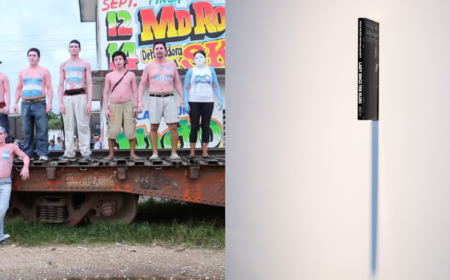
Theme music for Visualizing Abolition is Pray by Terri Lyne Carrington and Social Science. Our cover art features an image from Christopher Harris’s still/here.